

Every year, thousands of workers across the GCC face a silent killer heatstroke. With temperatures soaring above 50°C in countries like Saudi Arabia, UAE, Qatar, Kuwait, Bahrain, and Oman, outdoor workers are constantly at risk. Construction laborers, delivery drivers, oil field workers, and warehouse staff spend hours under the blazing sun. Many of them don’t recognize the early dehydration symptoms or signs of heatstroke until it’s too late.
The painful truth? Most heat-related deaths are preventable. A little awareness and basic first aid training can make the difference between life and death. Whether you are an employer responsible for worker safety or an individual working in extreme heat, this guide will help you understand heatstroke, spot the warning signs early, respond with the right heatstroke first aid steps, and stay protected with practical safety tips.
What Is Heatstroke and Why Is It So Dangerous?
Heatstroke is most simple form of heat-related illness. It happens when your body loses its ability to cool itself down. Your internal temperature rises to 40°C (104°F) or higher, and your organs start to shut down. Understanding the difference between hyperthermia and heat exhaustion is critical because the response to each condition varies significantly.
Heat exhaustion gives you a window to recover with rest, fluids, and cooling. heatstroke is a medical emergency. According to the World Health Organization (WHO), extreme heat causes over 166,000 deaths globally every year. GCC countries face an even higher risk because of their harsh desert climate and large outdoor workforce.
Without immediate action, heatstroke can cause brain damage, organ failure, and even death within minutes. That is exactly why workplace safety training in UAE, KSA, and across the GCC is necessity not optional. HABC First Aid at Work training in GCC is one of the most effective ways to prepare for these emergencies.
Who Is Most at Risk in the GCC?
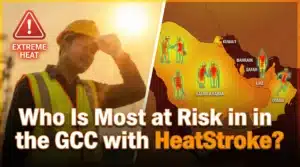
Heatstroke can affect anyone, but certain groups face a much higher risk:
- Oil and gas field workersoperating in remote, high-temperature zones
- Delivery personnel and driverswho move in and out of extreme heat
- Warehouse and factory workersin poorly ventilated spaces
- New workerswho have not acclimatized to the GCC heat
- People with chronic health conditionssuch as diabetes and heart disease
- Construction & infrastructure workersexposed to direct sunlight for long hours
Employers in these industries have both a legal and moral responsibility to protect their workers. Companies working toward ISO 45001 certification in KSA must identify and control workplace hazards, including extreme heat.
Providing proper safety measures and emergency response training is part of this responsibility. One effective way to meet these requirements is through certified First Aid at Work training.
Heatstroke First Aid Steps: What to Do When Every Second Counts
If someone is showing signs of heatstroke, follow this heatstroke first aid steps right away:
Step 1: Call Emergency Services
Contact local emergency numbers immediately:
| Country |
Emergency Number |
| UAE |
998 or 999 |
| Saudi Arabia |
997 |
| Qatar |
999 |
| Kuwait |
112 |
| Bahrain |
999 |
| Oman |
9999 |
Do not wait to see if the person improves on their own. Inform the dispatcher that you suspect heatstroke and provide your exact location.
Step 2: Move the Person to a Cool Area
Get them out of direct sunlight. Move them to a shaded area, an air-conditioned room, or any cooler environment available. Even a vehicle with the air conditioning running can serve as a temporary cooling station.
Step 3: Cool the Body Down Quickly
This is the most critical step in any sunstroke treatment protocol. Use every method available:
- Apply ice packs to the neck, armpits, and groin.
- Use cold water immersion for rapid cooling.
- Pour cool water over their body
- Fan them continuously to speed up evaporation
- Place wet towels on their forehead and chest
Step 4: Do Not Give Fluids If Unconscious
If the person is conscious and alert, offer small sips of cool water. But never give fluids to someone who is unconscious, vomiting, or confused. This can cause choking and aspiration, creating a second emergency on top of the first.
Step 5: Monitor and Stay Until Help Arrives
Keep checking their breathing and body temperature. If the person is unconscious but breathing, place them in the recovery position (on their side with the airway clear). If breathing stops, be prepared to perform CPR and AED techniques if you are certified. Stay with them until medical professionals take over.
Step 6: Be Ready for Cardiac Arrest
In simple heatstroke cases, the heart can stop. Workers trained in CPR and AED training are equipped to deliver chest compressions and use an automated external defibrillator if one is available on-site. This single skill can bridge the gap between collapse and the arrival of paramedics.
These steps are straightforward on paper, but performing them correctly under pressure requires practice. That is why organizations like Abacus International Training & Consultancy offer hands on HABC First Aid training in the GCC that prepares you for real emergencies, not just theoretical ones.
Warning Signs of Heatstroke You Must Never Ignore
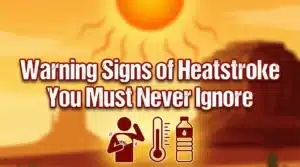
Recognizing the early signs of heatstroke can save a life. Understanding the progression from dehydration symptoms to heat exhaustion to full heatstroke helps you act at the right moment. Here are the key warning signs:
Early Warning Signs (Heat Exhaustion Stage)
- Heavy sweating followed by a sudden stop of sweating
- Dizziness and lightheadedness
- Nausea or vomiting
- Muscle cramps and weakness
- Rapid heartbeat
- Headache that gets worse
- Intense thirst and visible dehydration symptoms like dark urine and dry mouth
At this stage, moving the person to shade, providing cool water, and resting can often prevent the condition from escalating. But if these signs are ignored, the situation can turn life threatening within minutes.
Severe Warning Signs (Heatstroke Stage)
- Body temperature above 40°C (104°F)
- Hot, red, and dry skin with no sweating
- Confusion, slurred speech, or agitation
- Seizures or convulsions
- Loss of consciousness
If you notice any of these severe signs in a coworker or anyone around you, act immediately. Every second counts. It is a full medical emergency requiring immediate sunstroke treatment and professional medical care.
The problem is that most people freeze during emergencies because they don’t know what to do. This is where proper workplace safety training in UAE and across the GCC becomes a game changer. When you are trained through hands-on programs like HABC First Aid at Work training in the GCC, you respond with confidence instead of panic.
Safety Tips to Prevent Heatstroke in the GCC
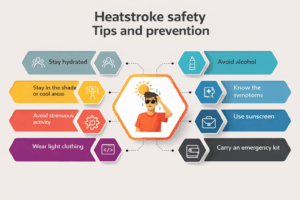
Prevention is always better than cure. Effective occupational heat stress management combines personal responsibility with organizational policies. Here are proven safety tips for workers and employers in the GCC in 2026:
For Workers
- Drink water regularly, even if you don’t feel thirsty. Aim for at least 1 liter per hour during outdoor work.
- Wear lightweight, loose fitting, and light-colored clothing.
- Take regular breaks in shaded or cool areas.
- Avoid caffeine and sugary drinks during work hours.
- Know your body. If you feel dizzy or unwell, stop working and inform your supervisor immediately.
For Employers
- Provide access to clean drinking water, shaded rest areas, and cooling stations.
- Implement a buddy system so workers can watch out for each other.
- Train all employees in first aid training specific to heat related emergencies.
- Follow GCC labor laws regarding midday work bans during summer months.
- Schedule heavy outdoor tasks during cooler parts of the day, especially early morning.
According to the International Labour Organization (ILO), workplace safety training reduces occupational injuries by up to 60%. Investing in first aid training is not just about compliance. It is about building a culture of safety that protects your most valuable asset: your people.
Why First Aid Training in GCC Is Necessary for Workplaces
Let’s be honest. Reading an article about first aid is helpful, but it is not enough. When an emergency strikes, you need muscle memory and confidence that only come from proper training. Abacus International Training & Consultancy offer HABC First Aid at Work courses that are internationally recognized and designed for the real challenges of GCC workplaces. Here is what makes our program stand out:
For Individuals:
- Complete your first aid certificationin just 1 day
- Learn from expert trainers with real world experience
- Get an internationally accredited certificate from HABC
- Available online across the entire GCC region
- Gain practical skills in CPR and AED training, sunstroke treatment, bleeding control, and more.
For Corporate Clients:
- Fully customized first aid training programs tailored to your industry
- Flexible duration based on your team’s needs and schedule
- Industry specific scenarios including heat related emergencies, chemical exposure, and fall injuries
- Aligned with ISO 45001, OSHA heat illness prevention standards, and GCC regulations.
- Training that meets GCC regulatory requirements and international standards
- Bulk enrollment options for large teams
Whether you run a construction company in Riyadh, a logistics firm in Dubai, or an oil company in Kuwait, our corporate training solutions are built to fit your exact needs.
Don’t Wait for an Emergency to Act
Heatstroke is predictable and preventable. The warning signs are clear. The first aid steps are straightforward. And the safety measures are practical. But none of this matter if your team is not trained to act. None of this works, if your team is not trained to act. Every summer in the GCC, workers collapse on job sites because the people around them didn’t know how to help. You can change that.
Equip yourself and your team with the knowledge and skills to save lives. Explore our first aid training courses at Abacus International Training & Consultancy today. Because when the heat rises, your preparation should rise with it.
According to OSHA guidelines, employers who invest in heat illness prevention programs see fewer injuries, lower absenteeism, and higher worker morale. The return on investing in first aid training goes far beyond compliance.
Ready to protect your workforce? Visit www.abacus-int.com to enroll in our HABC First Aid at Work course or request a customized corporate training program. One day of training can save a lifetime.
Frequently Asked Questions (FAQs)
1. What is the difference between heat exhaustion and heatstroke?
Heat exhaustion is a milder stage of heat illness where the body is overheating but still sweating. Symptoms include dizziness, nausea, and cramps. Heatstroke happens when the body can no longer cool itself and the temperature rises above 40°C (104°F). Signs include hot skin, confusion, and unconsciousness.
2. What should I do if a coworker collapses from heatstroke on a construction site?
- Call emergency services (997 in KSA, 998/999 in UAE).
- Move the person to a shaded or cool area.
- Apply ice packs to the neck, armpits, and groin
- Pour cool water over the body
- Fan continuously
- Do not give fluids if the person is unconscious.
- If they stop breathing, begin CPR if trained.
- Certified first aid training improves readiness to handle such emergencies.
3. Is first aid training mandatory for workplaces in the UAE and Saudi Arabia?
GCC labor laws require employers to protect worker safety, and first aid training is essential. In the UAE, MoHRE enforces rules like the midday work ban, while Saudi law also mandates employer responsibility. Aligning with ISO 45001 and OSHA guidelines ensures compliance, and accredited training keeps your team fully prepared.
4. Can I get first aid certification online in the GCC?
Absolutely. Abacus International Training & Consultancy offers first aid certification online through its HABC First Aid at Work training in the GCC program. You can complete the course in just one day from anywhere in Saudi Arabia, UAE, Qatar, Kuwait, Bahrain, or Oman.
5. How can employers reduce heatstroke risk for outdoor workers during summer?
Following OSHA’s “water, rest, and shade” approach with regular safety training can greatly reduce heat related incidents. Most importantly, ensure staff receive certified first aid training.