

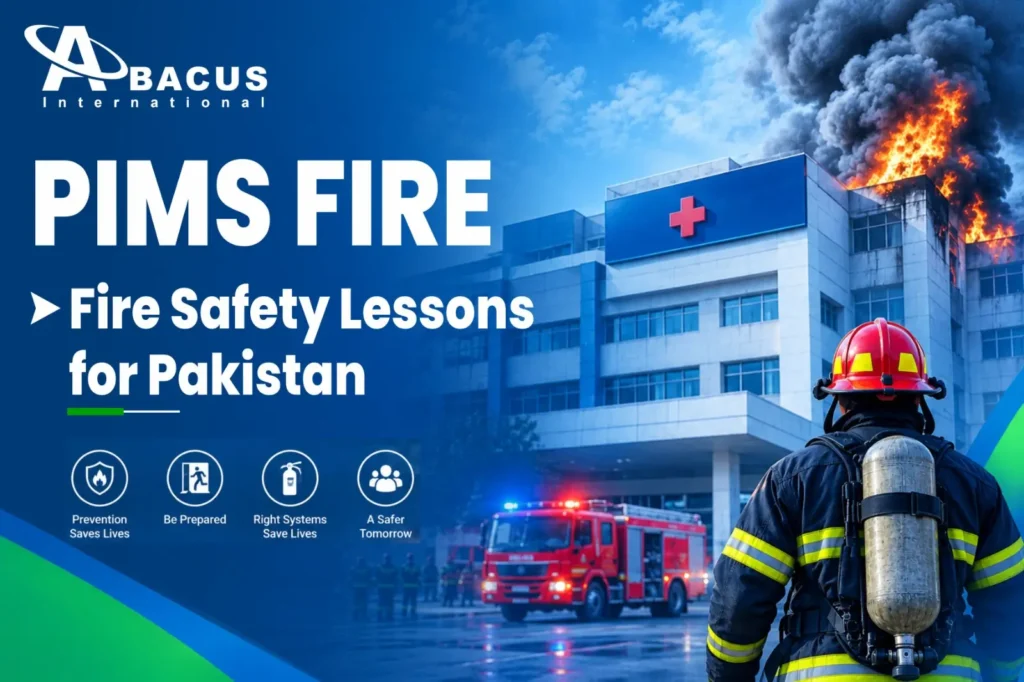
PIMS Hospital Fire: Fire Safety Lessons for Pakistan
The devastating fire at the Pakistan Institute of Medical Sciences (PIMS) in Islamabad has shaken families, healthcare professionals, and communities nationwide. On the morning of August 26, 2026, a fire erupted in the neonatal intensive care section of the Mother and Child Health (MCH) ward, claiming the lives of fourteen newborn infants.
At Abacus International, we extend our heartfelt condolences to the grieving families who endured an unimaginable loss.
As an accredited occupational health, safety, and environment (HSE) training institute, we recognize that true honor for the victims lies in taking immediate, systematic action. We must examine what went wrong, confront systemic compliance gaps, and address the defining question facing our country: What must Pakistani institutions do differently to prevent another catastrophe?
The PIMS tragedy is an urgent reminder that fire safety is not solely the concern of emergency rescue services or certified safety auditors. Fire safety is everyone’s responsibility.
What Happened at PIMS Hospital? The Anatomy of a Preventable Crisis
Preliminary investigative reports indicated that the blaze originated around 6:45 a.m. on the third floor of the MCH ward, ignited by an electrical short circuit or compressor malfunction in an air-conditioning unit within the neonatal nursery. Despite prompt deployment by rescue firefighters, the dense smoke and toxic fumes rapidly compromised the ward.
Official inquiries and post-incident hospital inspections across the federal capital revealed critical institutional vulnerabilities, including:
- Absence of Early Detection: Delays in automated smoke and heat detection hindered immediate notification.
- Infrastructure & Electrical Deficiencies: Aging wiring, continuous air-conditioning overloads, and uncertified electrical additions created catastrophic points of failure.
- Evacuation Bottlenecks: A lack of clear, specialized evacuation routes suited for non-ambulatory infants in incubators.
- Staff Preparedness Gaps: Duty staff lacked structured emergency fire response drills and life-safety containment training.
While legal and technical investigations establish precise statutory accountability, the broader lesson for Pakistani leadership is unambiguous: organizations cannot rely on good luck or paper-only policies when human lives are at stake.
Why Fire Safety Is an Urgent Concern for Every Sector in Pakistan
A sudden fire does not discriminate by industry or building classification. A blaze can ignite anywhere in seconds:
- Healthcare Facilities: Intensive care units, operating theaters, and maternity wards.
- Industrial Plants & Warehouses: Factories, textile mills, and chemical storage facilities.
- Commercial & Corporate Spaces: High-rise towers, software houses, shopping malls, and hotels.
- Educational Institutions: Universities, schools, and research laboratories.
In an active fire, occupant survival is determined within the first 180 seconds. A receptionist noticing smoke, an administrative officer pulling a manual call point, or a designated floor warden guiding employees to emergency exits can mean the difference between an orderly evacuation and a mass-casualty disaster.
6 Critical Lessons Every Organization Must Implement
1. Fire Prevention Must Precede Firefighting
The safest fire emergency is the one that is eliminated before it can begin. Over 70% of commercial fires in urban Pakistan stem from substandard wiring, loose connections, ungrounded circuits, and over-utilized electrical breakers.
Every facility must implement rigorous workplace fire prevention best practices combined with regular hazard identification and risk assessment. Key preventative focal points include:
- Electrical Audits: Thermographic scanning of distribution boards and air-conditioning compressors to detect overheating.
- Housekeeping & Storage: Separating combustible paper, chemical supplies, and packaging materials from heat sources.
- Specialized Electrical Safety: Aligning facility wiring with international standards such as NFPA 70E electrical safety practices.
2. Early Detection and Integrated Alarms Save Decisive Minutes
When an electrical unit begins smoldering, seconds dictate whether occupants escape or inhale lethal concentrations of carbon monoxide.
A comprehensive fire protection strategy demands compliant active engineering controls:
- Addressable Smoke and Heat Detectors: Positioned in patient rooms, server facilities, and false ceilings.
- Audible & Visual Alarms: Integrated sounders and strobe lights to alert occupants across entire multi-story zones.
- Suppression Hardware: Well-maintained automatic sprinklers and dry-pipe risers that align with the Building Code of Pakistan (Fire Safety Provisions).
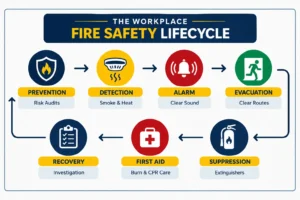
Installing hardware is only the initial step. Safety equipment must follow a strict lifecycle: Professional Installation → Routine Functional Testing → Preventive Maintenance Staff Familiarization.
3. Emergency Exits Must Remain Clear, Unlocked, and Accessible 24/7
During an emergency evacuation, panic escalates exponentially when an exit door is locked, blocked by discarded furniture, or obscured by darkness.
According to global life safety regulations outlined by OSHA emergency exit standards, emergency escape routes must be:
- Unobstructed at all times: Zero storage of boxes, gurneys, or cleaning carts in corridors or stairwells.
- Illuminated by Backed-Up Emergency Lighting: Operational for a minimum of 90 minutes during main power grid failure.
- Outfitted with Panic Push-Bars: Doors must open outwards in the direction of egress without keys or specialized knowledge.
- Designed Around Egress Codes: Fully aligned with NFPA 101: Life Safety Code essentials.
4. Fire Extinguishers Are Useful Tools, Not Complete Evacuation Plans
Mounting a dry powder cylinder on a wall does not fulfill your organization’s legal or moral duty of care. When an incipient fire breaks out, untrained personnel frequently hesitate, deploy the incorrect medium, or waste vital evacuation time.
Staff must understand the different types of fire extinguishers and their uses (e.g., deploying CO₂ on electrical fires instead of pressurized water) and remember the fundamental rule of life safety: Extinguishers are strictly for small, incipient fires to clear an escape route. If the fire threatens your exit corridor or produces heavy smoke, evacuate immediately.
5. Practical Safety Training Trumps Written Manuals
A binder containing safety protocols on an administrator’s shelf saves no one in a smoke-filled hallway. True organizational resilience requires practical, hands-on instruction.
Enrolling workforce members in an accredited Fire Safety Course ensures employees can calmly operate emergency equipment, lead coworkers along designated evacuation paths, and fulfill the core duties of a designated fire safety officer. When an alarm sounds, employees should execute muscle memory, not improvise during a crisis.
6. Evacuation Drills Must Identify System Weaknesses, Not Check Attendance Boxes
Too many Pakistani workplaces conduct simulated drills merely to fulfill basic licensing requirements. A valuable evacuation drill should rigorously stress-test the building’s emergency response:
- Did every department hear and understand the primary alarm?
- How many minutes did total facility clearance take?
- Were primary stairwells choked with evacuees, requiring secondary route diversion?
- Were designated assembly areas safe from arriving emergency rescue vehicles?
- Could wardens quickly account for visitors, contractors, and individuals with disabilities?
Facilities benefit substantially by engaging third-party specialists for emergency preparedness and response consultancy to audit evacuation timelines and resolve operational blind spots.
ospital Fire Safety: Specialized Protocols for Healthcare Settings
Hospitals present unique structural and human challenges that standard commercial buildings do not face.
| Operational Factor | Standard Commercial Office | Hospital / Medical Care Facility |
|---|---|---|
| Occupant Mobility | Ambulatory; independent egress | Non-ambulatory; post-op; newborns in incubators |
| Evacuation Strategy | Immediate vertical exit to outside | Progressive Horizontal Evacuation behind fire compartments |
| Combustion Hazards | Paper, standard office electronics | Pressurized oxygen (O2), flammable anesthetics, medical equipment |
| Power Dependency | Computers / office lighting | Life-support ventilators, dialysis, continuous incubators |
In healthcare facilities, immediate vertical evacuation down multi-story staircases is often impossible for critically ill patients or neonates.
Healthcare administrators must design safety protocols around Progressive Horizontal Evacuation (PHE). This protocol moves vulnerable patients horizontally through two-hour fire-rated smoke barrier doors into an adjacent safe zone on the same floor, buying crucial time for containment without disconnecting life-support systems.
Furthermore, medical infrastructure must strictly comply with specialized codes such as NFPA 99: Health Care Facilities Code to regulate gas lines, backup electrical emergency transfer switches, and nursery isolation zones.
Why First Aid and CPR Are Essential Life-Saving Skills During Fires
In structure fires, toxic smoke inhalation and thermal burns claim lives long before flames reach occupants. Structural collapses and chaotic stampedes can also result in traumatic crush injuries, cardiac arrests, and severe bleeding.
Relying solely on external emergency services like Rescue 1122 introduces a dangerous gap: irreversible brain death from hypoxia begins within 4 to 6 minutes of cardiac or respiratory arrest.
THE CRITICAL RESPONSE WINDOW
0 – 4 Minutes : CPR/ First Aid Prevents brain damage
4 – 8 Minutes : Premanent neurological trauma begins
8- 15 Minutes : Average emergency responder arrival
Equipping employees with certified HABC First Aid and CPR training and Basic Life Support (BLS) and AED skills empowers non-medical staff to provide immediate, decisive care:
- Smoke Inhalation Management: Maintaining open airways and positioning unconscious victims recovery-side.
- Trauma Stabilization: Applying direct pressure and sterile dressings to lacerations sustained during emergency exits.
- Burn Care: Implementing correct, sterile burn injury first aid treatment rather than applying harmful household remedies.
Workplace First Aid is not merely an HR compliance checkbox; it is a foundational life skill that preserves human life until professional paramedics take over.
Facility Self-Audit: Workplace Fire Safety Checklist
Use this practical audit tool to assess your organization’s current safety posture:
1. Fire Prevention & Hazard Control
[ ] Certified electrical inspection conducted within the past 12 months.
[ ] Heavy air-conditioning and refrigeration equipment serviced and tested.
[ ] Flammable gasses, chemicals, and medical supplies isolated in rated storage.
[ ] Waste management practices eliminate combustible accumulation.
2. Active Fire Protection Systems
[ ] Integrated smoke/heat detection tested across all corridors and utility rooms.
[ ] Extinguishers inspected, tagged, and pressure-checked every 6 months.
[ ] Central fire alarm panel monitored 24/7 with secondary battery backup.
[ ] Water storage tanks and booster fire pumps verified operational.
3. Emergency Egress & Evacuation Routes
[ ] All emergency fire doors open outward and operate without key locks.
[ ] Corridors, stairwells, and emergency exits clear of all obstructions.
[ ] Luminescent exit signs and emergency lights operational on secondary circuits.
[ ] Assembly points established in open spaces well away from building hazards.
4. People, Training & Emergency Drills
[ ] Designated floor wardens appointed, trained, and clearly identifiable.
[ ] At least 20% of facility staff certified in workplace First Aid and CPR.
[ ] Full-scale emergency evacuation drill conducted within the past 6 months.
[ ] Tailored evacuation plans established for vulnerable individuals and patients.
If two or more boxes remain unchecked, your facility is vulnerable to preventable life-safety emergencies.
Professional Fire Safety and HSE Solutions by Abacus International
Achieving a safe workplace requires moving beyond basic awareness to implement structured safety cultures.
Abacus International is Pakistan’s leading occupational safety training and consulting institution. We assist hospitals, industrial groups, commercial enterprises, and educational institutions in safeguarding personnel and critical infrastructure through internationally benchmarked solutions:
- Comprehensive Fire Safety Courses: Practical fire safety and firefighting training in Pakistan covering fire behavior, containment, and hands-on extinguisher training.
- International Fire Protection Qualifications: Specialized certification preparation including the Certified Fire Protection Specialist (CFPS).
- Recognized First Aid & Medical Response: Highfield (HABC) UK-accredited First Aid Courses in Lahore, Karachi, and Islamabad.
- Custom Corporate HSE Solutions: Bespoke corporate safety training tailored specifically to the unique operational risks of your workplace.
- Facility Life Safety & Fire Risk Audits: Independent fire risk assessments evaluating passive compartmentation, egress capacity, and early detection mechanisms.
Frequently Asked Questions (FAQ)
What were the primary findings of the PIMS hospital fire inquiry?
The interim investigative committees identified acute vulnerabilities in institutional fire protection, including delayed smoke alarm activation, electrical overloads linked to cooling units, lack of clear horizontal evacuation corridors for non-ambulatory neonates, and an absence of regular fire drill practice among duty staff.
How often should Pakistani organizations conduct fire drills?
According to national safety guidelines and international fire codes, commercial and industrial workplaces should conduct full-scale fire evacuation drills at least twice a year. High-risk occupancy buildings, such as healthcare facilities and schools, should run quarterly emergency simulations to evaluate departmental response times.
What is progressive horizontal evacuation in healthcare fire safety?
Progressive horizontal evacuation is the specialized practice of moving non-ambulatory, bedridden, or incubator-dependent patients away from a fire zone into an adjacent, fire-rated smoke compartment on the identical floor level. This avoids moving delicate life-support equipment down stairwells while isolating patients from thermal and smoke dangers behind two-hour fire doors.
Can individuals or corporate teams register for accredited Fire Safety and First Aid courses?
Yes. Abacus International runs open-enrollment training batches for individual HSE practitioners as well as tailored, on-site corporate training packages for healthcare systems, multinational organizations, and local enterprises throughout Pakistan.
Preparedness Must Precede the Emergency
The heartbreaking loss of fourteen newborn lives at PIMS Hospital must be a turning point for institutional accountability across Pakistan. Safety is neither an accidental outcome nor a disposable administrative expenditure—it is an active discipline built upon rigorous hazard prevention, sound engineering design, and trained personnel.
Take proactive steps to audit your facility’s fire systems, evaluate your escape routes, and train your staff today.
Protect your people and secure your facility.
👉 Contact Abacus International Today to schedule a Comprehensive Fire Safety Audit or register your team for Corporate Fire Safety & First Aid Training.