
WISH TO BECOME
Certified Safety Professional?
DO IT with BEST Training Provider
Boost Your Safety Career
Duration
02 Months Duration
Mode of Study
Online
Locations
saudi Arabia
Awarding Body
BCSP
Board Of Certified Safety Professionals (BCSP)
The Board of Certified Safety Professionals (BCSP) is a USA based organization that focuses on promoting and enhancing the safety profession globally. BCSP plays a significant role in advancing the field of occupational safety and health by certifying safety professionals and advocating for high standards of safety knowledge and practice. BCSP offers a range of certifications that cover different aspects of safety, including: Certified Safety Professional (CSP), Associate Safety Professional (ASP), Certified Safety and Health Manager (CSHM), Certified Environmental, Safety and Health Trainer (CET), Occupational Hygiene and Safety Technician (OHST), Construction Health and Safety Technician (CHST) & Safety Management Specialist (SMS). By acquiring these certifications, safety professionals demonstrate their expertise in various fields. These include, but are not limited to, healthcare, insurance, construction, petroleum, and mining.
Certified Safety Professional (CSP) Certification in Saudi Arabia
Certified Safety Professional (CSP) is a management level certification from BCSP. The CSP certification is considered one of the highest levels of achievement in the safety field.
Abacus International Training & Consultancy is offering online CSP training course in Riyadh, Jaddah & Dammam Saudi Arabia. Our preparation program consists of exam-focused knowledge targeted learning materials and practice resources aligned with the Examination blueprint V10.0.
Certified Safety Professional (CSP) will guide you toward a hands-on and pragmatic career path. The CSP certification course is structured to provide a comprehensive understanding of safety principles, risk management, regulatory compliance, and best practices in various industries. Participants will gain the expertise necessary to identify and mitigate workplace hazards, develop effective safety programs, and contribute to the creation of safer work environments. For further queries about the course, you can contact our learning advisors.
Request a Free Consultation →
What is CSP Certification?
CSP full form is Certified Safety Professional. It is a globally recognized credential issued by the Board of Certified Safety Professionals (BCSP), based in the United States.
The CSP certification validates that a safety professional has:
- Advanced knowledge of safety management systems
- Ability to identify, evaluate, and control workplace hazards
- Skills to develop and implement safety programs
- Experience in real-world safety practice
The CSP is considered the gold standard in the safety profession. It is recognized by employers, regulatory bodies, and industries across Saudi Arabia, the Middle East, and the entire world.
If you work in health, safety, and environment (HSE) and want to advance your career, the CSP certification is the credential you need.
Need Assistance Contact Us
Who should go for Certified Safety Professional (CSP)?
The Certified Safety Professional (CSP) certification is suitable for a range of professionals who are committed to occupational safety and health. Those who should consider pursuing the CSP certification include: Safety Practitioners, Safety Consultants, Industrial Hygienists, Health and Safety Managers, Environmental Health and Safety (EHS) Professionals, Safety Engineers, Safety Instructors and Trainers, Graduates with Safety Degrees, Government Safety Officials and Anyone Committed to Safety who are looking to establish themselves as safety professionals and advance their careers in roles related to workplace safety. (must meet the eligibility requirements from BCSP).
Request a Call Back
One of our learning adviser will call you soon.
CSP Fee & Facilites in Saudi Arabia
Online Session
- Certified Experienced Tutors
- 02 Months Classes
- Weekend based Evening classes
- 24/7 WhatsApp Tutor Support
- Classes via ZOOM
- DISCOUNT AVAILABLE
- Early Bird Discount
- Group Discount
- Corporate Client Discount
The application fee for CSP is $160, and the CSP exams cost $350. Once your application is approved, you can purchase the exam, receive an authorization code by email, and schedule the exam at a Pearson VUE test center.
Syllabus for CSP Exam in Saudi Arabia
Course Outline
1. Core concepts in anatomy and physiology
2. Core concepts in chemistry (e.g., organic chemistry, general chemistry, and biochemistry)
3. Core concepts in physics (e.g., forms of energy, weights, forces, and stresses)
4. Mathematics (e.g., geometry, algebra, trigonometry, finance and accounting, engineering, and economics)
5. Statistics for interpreting data (e.g., mean, median, mode, confidence intervals, probabilities, and pareto analysis)
6. Core research methodology
7. Microbiology (e.g., nanotechnology, waterborne pathogens, and bloodborne pathogens)
1. Benchmarks and performance standards/metrics
2. How to measure, analyze, and improve organizational culture
3. Incident investigation techniques and analysis (e.g., causal factors)
4. Management of change techniques (prior, during, and after)
5. System safety analysis techniques (e.g., fault tree analysis, failure modes and effect analysis [FMEA], Safety Case
approach, and Risk Summation)
6. The elements of business continuity and contingency plans
7. Types of leading and lagging safety, health, environmental, and security performance indicators
8. Safety, health, and environmental management and audit systems (e.g., ISO 14000, 45001, 19011, ANSI Z10)
9. Applicable requirements for plans, systems, and policies (e.g., safety, health, environmental, fire, and emergency action)
10. Document retention or management principles (e.g., incident investigation, training records, exposure records,
maintenance records, environmental management system, and audit results)
11. Budgeting, finance, and economic analysis techniques and principles (e.g., timelines, budget development, milestones,
resourcing, financing risk management options, return on investment, cost/benefit analysis, and role in procurement process)
12. Management leadership techniques (e.g., management theories, leadership theories, motivation, discipline,
and communication styles)
13. Project management concepts and techniques (e.g., RACI charts, project timelines, and budgets)
1. Hazard identification and analysis methods (e.g., job safety analysis, hazard analysis, human performance analysis,
and audit and causal analysis)
2. Risk analysis
3. Risk evaluation (decision making)
4. The risk management process
5. The costs and benefits of risk assessment process
6. Insurance/risk transfer principles
1. Principles of safety through design and inherently safer designs (e.g., designing out hazards during design phase,
avoidance, elimination, and substitution)
2. Engineering controls (e.g., ventilation, guarding, isolation, and active vs. passive)
3. Administrative controls (e.g., job rotation, training, procedures, and safety policies and practices)
4. Personal protective equipment
5. Chemical process safety management (e.g., pressure relief systems, chemical compatibility, management of change,
materials of construction, and process flow diagrams)
6. Redundancy systems (e.g., energy isolation and ventilation)
7. Common workplace hazards (e.g., electrical, falls, same level falls, confined spaces, lockout/tagout, working around
water, caught in, struck by, excavation, welding, hot work, cold and heat stress, combustibles, laser, and others)
8. Facility life safety features (e.g., public space safety, floor loading, and occupancy loads)
9. Fleet safety principles (e.g., driver and equipment safety, maintenance, surveillance equipment, GPS monitoring,
telematics, hybrid vehicles, fuel systems, driving under the influence, and fatigue)
10. Transportation safety principles (e.g., air, rail, and marine)
11. Materials handling (e.g., forklifts, cranes, hand trucks, person lifts, hoists, rigging, manual, and drones)
12. Foreign material exclusion (FME) and foreign object damage (FOD)
13. Hazardous materials management (e.g., GHS labels, storage and handling, policy, and security)
14. Multi-employee worksite issues (e.g., contractors and temporary or seasonal employees)
15. Sources of information on hazards and risk management options (e.g., subject matter experts, relevant best practices,
published literature, and SDS)
16. The safety design criteria for workplace facilities, machines, and practices (e.g., UL, NFPA, NIOSH, FM, and ISO)
17. Tools, machines, practices, and equipment safety (e.g., hand tools, ladders, grinders, hydraulics, and robotics)
18. Workplace hazards (e.g., nanoparticles, combustible dust, heat systems, high pressure, radiation, silica dust, powder
and spray applications, blasting, and molten metals)
19. Human performance
1. Emergency/crisis/disaster response planning/business continuity (e.g., nuclear incidents, natural disasters, terrorist
attacks, chemical spills, fires, active violent attacks, and public utilities)
2. Fire prevention, protection, and suppression systems
3. The transportation and security of hazardous materials
4. Workplace violence and prevention techniques (violence on employees)
1. Advanced toxicology principles (e.g., symptoms of an exposure, LD50, mutagens, teratogens, and ototoxins)
2. Carcinogens
3. Ergonomics and human factors principles (e.g., visual acuity, body mechanics, lifting, vibration, anthropometrics,
and fatigue management)
4. How to recognize occupational exposures (e.g., hazardous chemicals, radiation, noise, biological agents, heat/cold,
infectious diseases, nanoparticles, and indoor air quality)
5. How to evaluate occupational exposures (e.g., hazardous chemicals, radiation, noise, biological agents, heat/cold,
infectious diseases, ventilation, nanoparticles, and indoor air quality), including techniques for measurement, sampling,
and analysis
6. How to control occupational exposures (e.g., hazardous chemicals, radiation, noise, biological agents, heat/cold,
ventilation, nanoparticles, infectious diseases, and indoor air quality)
7. Employee substance abuse
8. The fundamentals of epidemiology
9. Occupational exposure limits (e.g., hazardous chemicals, radiation, noise, biological agents, and heat)
1. Environmental protection and pollution prevention methods (e.g., air, water, soil, containment, soil vapor intrusion,
and waste streams)
2. How released hazardous materials migrate/interact through the air, surface water, soil, and water table
3. Sustainability principles
4. Waste water treatment plants, onsite waste water treatment plants, and public water systems
5. Registration, evaluation, authorization and restriction of chemicals (REACH) and restriction of hazardous substances (RoHS)
1. Education and training methods and techniques (e.g., classroom, online, computer-based, AI, and on-the-job training)
2. Training, qualification, and competency requirements
3. Methods for determining the effectiveness of training programs (e.g., determine if trainees are applying training on the job)
4. Effective presentation techniques
1. Legal issues (e.g., tort, negligence, civil, criminal, contracts, and disability terminology)
2. Protection of confidential information (e.g., privacy, trade secrets, personally identifiable information, and General
Data Protection Regulation [GDPR])
3. Standards development processes
4. The ethics related to conducting professional practice (e.g., audits, record keeping, sampling, and standard writing)
5. The relationship between labor and management
6. BCSP Code of Ethics
7. Workers’ compensation (e.g., injured worker’s compensation)
Eligibility Criteria To Take CSP Exam In Saudi Arabia
To apply for CSP certification with BCSP, visit the My Profile portal on bcsp.org, create an account, and start the application from the “Applications” menu. After submitting your application and meeting all requirements, you will have one year to take and pass the certification exam.
All individuals applying for the CSP must have:
Educational Requirement:
- Must hold a bachelor’s degree as a minimum qualification.*
Work Experience Requirement:
- Should have a minimum of four (4) years of safety related experience.
- This experience should encompass at least 50% safety related duties and responsibilities, demonstrating a professional level of involvement with a broad range of safety tasks.
CSP Recognized Credentials:
Eligibility extends to those holding certain recognized qualifications by the Board of Certified Safety Professionals (BCSP), including:
- Associate Safety Professional (ASP)**
- Graduate Safety Practitioner (GSP)
- Transitional Safety Practitioner (TSP)**
- Certified Industrial Hygienist® (CIH®)
- Chartered Member of the Institution of Occupational Safety and Health (CMIOSH)**
- Canadian Registered Safety Professional (CRSP)**
- Professional Certificate in Safety and Occupational Health from the U.S. Army Combat Readiness Center (ACRC) (formerly “CP-12”)**
- Certified Safety Engineer (CSE) conferred by the State Administration of Work Safety (SAWS) in the People’s Republic of China (PRC)**
- Master’s in Occupational Safety and Health from the International Training Centre of the International Labour Organization (ITC-ILO)**
- NEBOSH National or International Diploma in Occupational Health and Safety**
- Professional Membership with the Singapore Institution of Safety Officers (SISO)**
Successful CSP Examination:
Candidates must pass the Certified Safety Professional (CSP) examination to qualify for certification.
Certification Maintenance:
Maintenance of the CSP certification entails:
- Annual renewal fees.
- Fulfillment of recertification requirements to ensure ongoing competence and professional development
How Certified Safety Professional (CSP) Exam is assessed?
The CSP examination is a computer based test, contains 200 multiple choice questions. You will have 5.5 hours to complete the examination. Official results are available immediately after the exam. You need to score at least 60% to pass CSP exam. This exam is designed to test your knowledge of safety principles and practices to assess your competence in the field of safety.
Benefits of CSP Certification
Taking CSP exam from Riyadh, Jaddah & Dammam, Saudi Arabia will get you following benefits:
Benefit | Details |
Higher Salary | CSP certified professionals earn 20–40% more than non-certified peers |
Job Security | Certified professionals are preferred for critical safety roles |
Global Mobility | CSP is recognized in 100+ countries |
Professional Credibility | Demonstrates verified knowledge and experience |
Leadership Roles | Opens doors to senior and executive safety positions |
Employer Preference | Major companies like Saudi Aramco, SABIC, and STC require or prefer CSP-certified candidates |
Regulatory Compliance | Helps organizations meet Saudi and international safety standards |
Process to Get CSP Certification?
Find Institute For CSP
Register Yourself
Get Training From Them
Pay CSP Exam Fee
Attempt & Clear Exam
Get Your Certification
HOW CSP Qualification IS BEST FOR YOU?
Contact Our Learning Advisor
Get answers to your Queries Right Away
Why Choose Abacus For CSP Course in Saudi Arabia?
Certified Tutors
Latest Content
Dedicated Team
7+ Years of Experience
By choosing Abacus International for CSP exams, students are making an informed choice for quality education, unwavering support, and a clear path toward achieving their safety career. Abacus International as a leading Training and Consultancy Company which on boards an immense team of internationally certified experienced Trainers and Consultants. Our expert team will guide you how to easily manage workplace safety and pass CSP exam in Riyadh, Jaddah & Dammam, Saudi Arabia.
Our Clients
- POWER & CEMENT
- TEXTILE & FERTILIZER
- ENGINEERING & STEEL
- IT AND ACADEMIA
- CHEMICAL & OIL
- RETAIL






























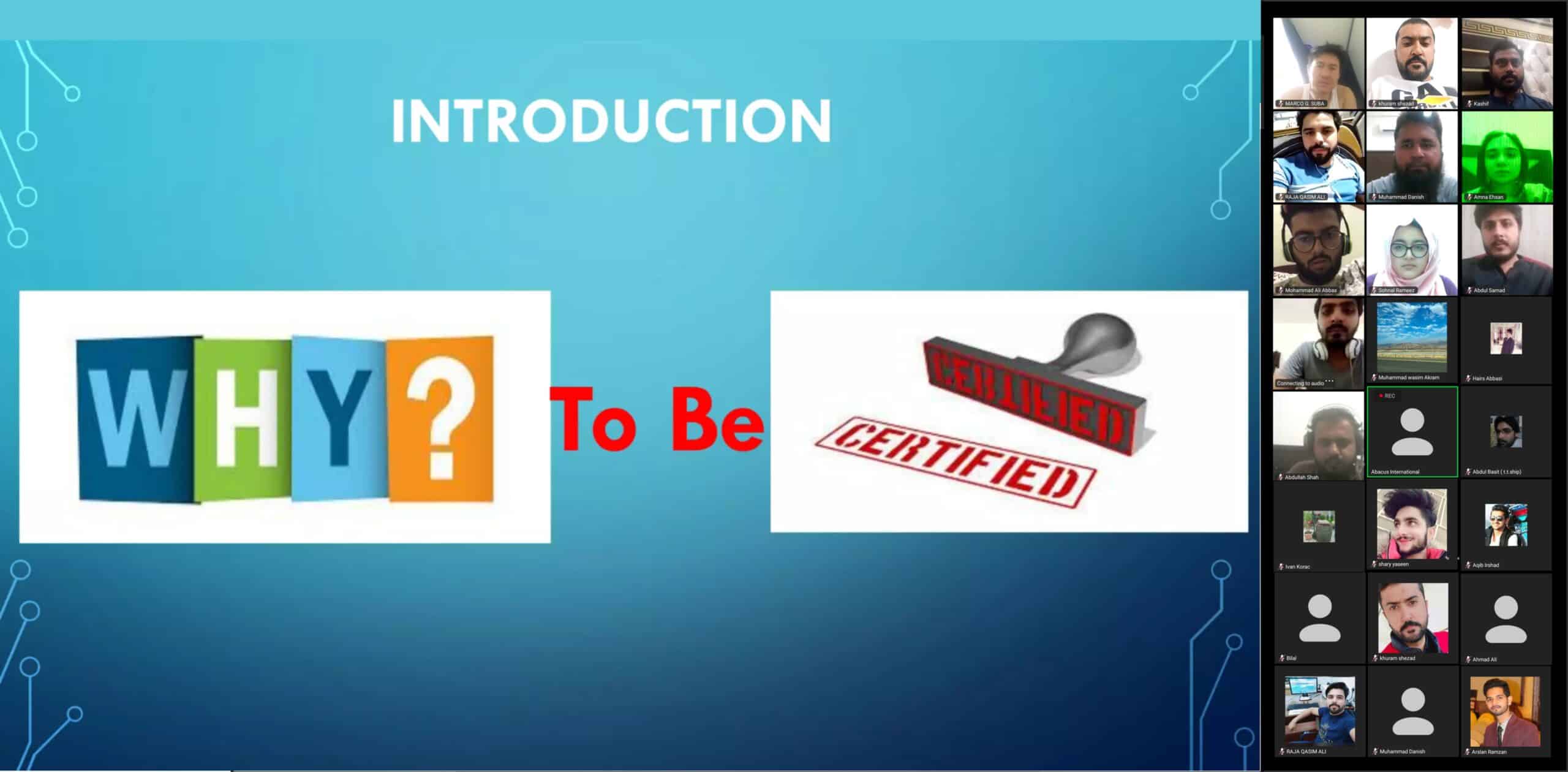
CSP Session Pictures
Frequently Asked Questions (FAQs)
Who administers the CSP certification?
The CSP certification is administered by the Board of Certified Safety Professionals (BCSP), an independent organization that sets and maintains standards for safety professionals.
What's the difference between ASP and CSP certifications?
The ASP certification is an entry-level certification that demonstrates foundational knowledge, while the Certified Safety Professional (CSP) certification is more advanced and requires additional experience. The CSP certification is often considered a progression from the ASP certification.
How can I prepare for the CSP exam?
There are various resources available for CSP exam preparation, including study guides, practice exams, and training courses. BCSP also provides information on the content and format of the exam.
What is passing marks for CSP?
To passing the CSP exam you need to score at least 61%.
What does the CSP exam cover?
The CSP exam covers a range of safety-related topics, including hazard identification, risk assessment, safety regulations, incident investigation, and safety management systems.
Is the CSP certification internationally recognized?
Yes, the CSP certification is recognized internationally as a valuable credential in the field of occupational safety.
How long is the CSP certification valid for?
The CSP certification is valid for five years. To maintain the certification, you need to fulfill certain continuing education requirements.
Can the CSP certification help me get a job in a specific industry?
Yes, the CSP certification can enhance your job prospects in various industries such as construction, healthcare, manufacturing, and more, as it demonstrates your foundational knowledge of safety principles that are applicable across different sectors.
Can I retake the CSP exam if I don't pass on my first attempt?
Yes, you can retake the CSP exam if you don’t pass on your first attempt. Abacus International has policies regarding retaking exams, including waiting periods and fees.
Can I hold other safety certifications in addition to the CSP?
Yes, many safety professionals hold multiple certifications in addition to the CSP, such as Certified Industrial Hygienist (CIH) or Certified Safety and Health Manager (CSHM), to further enhance their qualifications and expertise.
How can I verify someone's CSP certification?
You can verify someone’s CSP certification by checking the BCSP website or contacting BCSP directly to confirm their certification status.
Customer Reviews
EXCELLENT Based on 525 reviews Posted on Malik sheharyar MalikTrustindex verifies that the original source of the review is Google. Good place to enhance your experience in safety related fieldPosted on TURGUT_ ALP!Trustindex verifies that the original source of the review is Google. goodVerified by TrustindexTrustindex verified badge is the Universal Symbol of Trust. Only the greatest companies can get the verified badge who has a review score above 4.5, based on customer reviews over the past 12 months. Read more
Related Courses
Recent Posts
Who Will Be Affected by ISO 14001:2026 Changes? January 2026, the world’s most widely adopted environmental management standard gets its first major …
Every year, thousands of workers across the GCC face a silent killer heatstroke. With temperatures soaring above 50°C in countries like Saudi …
Are you a health and safety professional who feels stuck at the same career level? Do you watch others get promoted while …
Electrical engineers play a crucial role in designing, installing, and maintaining electrical systems across industries such as construction, oil & gas, energy, …
The oil and gas industry is one of the most dynamic and hazardous sectors in the world. From offshore drilling platforms to …
As workplace safety becomes a major priority across industries in Saudi Arabia—especially under Saudi Vision 2030—the demand for qualified Health & Safety …
Civil engineers play a critical role in construction and infrastructure development, working in environments where safety risks are high. From building bridges …
As workplace safety becomes a top priority across industries in Saudi Arabia, the demand for qualified safety officers continues to grow. Whether …